
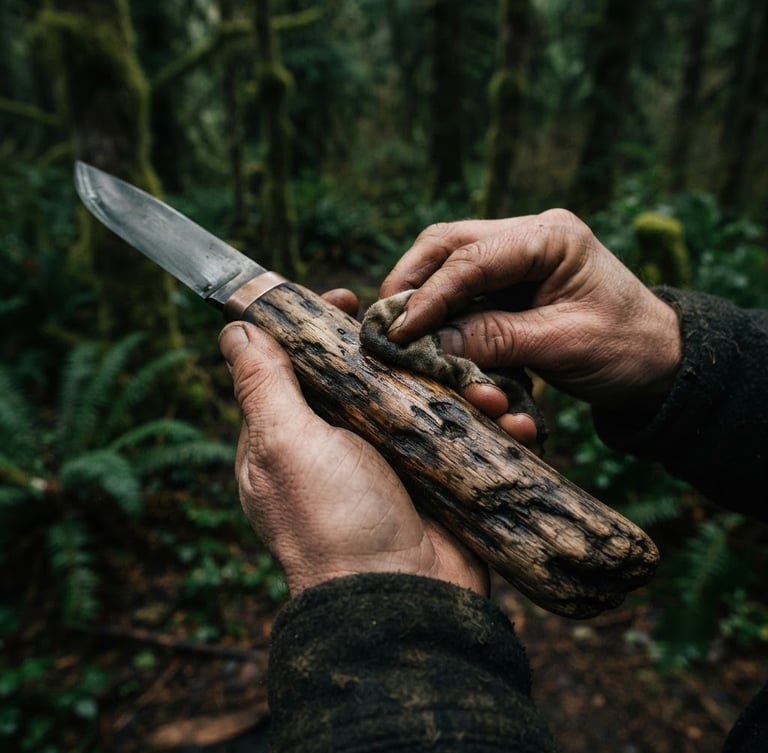
Honed to last a lifetime
High-carbon steel and organic handles require simple, regular care. Learn how to protect your New Zealand forged blade for generations below.
Avoid putting your knife in the dishwasher
Utilize a steel or stone to maintain the sharpness of the blade
A small amount of kitchen oil can be lightly applied to both the blade and the handle to keep them looking pristine
We suggest using Autosol to polish your knife on a monthly basis or as necessary
Three rules of the blade
03
Keep it dry
Oil the handle
Store with care
High-carbon steel reacts to moisture. Wipe your blade clean and dry immediately after use to prevent rust and build a rich, protective patina.
Our beachcombed timber and cast antler handles thrive on hydration. Apply beeswax or natural seed oil monthly to preserve their organic luster.
Never store your knife in its leather sheath long-term. Leather traps moisture; keep it in a dry, open space or a wooden block.
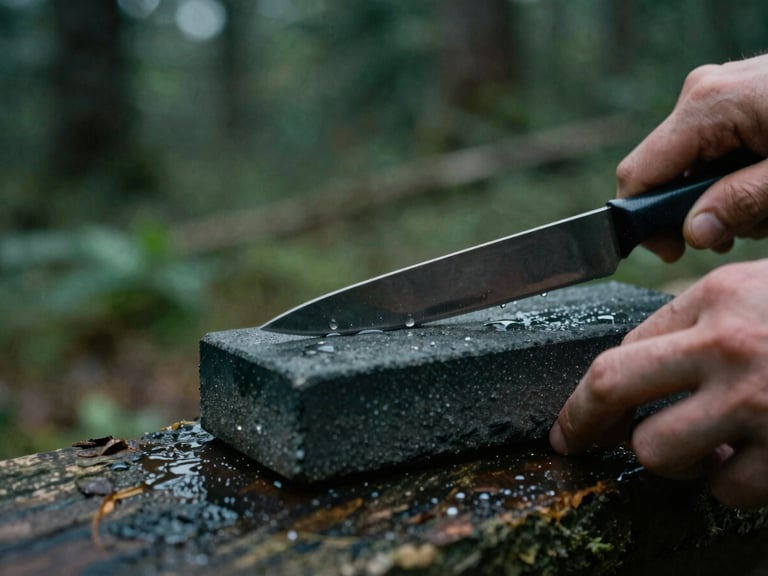
The art of the whetstone
Unlike soft industrial steel, our high-carbon blades are forged to hold an incredibly fine edge. Maintaining it requires a slow, deliberate touch on a water-lubricated whetstone.
Hold the blade at a consistent 15-degree angle. Draw it smoothly from heel to tip, letting the stone do the work. A few strokes on each side will restore its razor-sharp utility.
Blade Wisdom
Everything you need to know about maintaining the functional integrity of our recycled New Zealand coastal timber, cast antler handles, and hand-forged steel.
Why is my blade changing color?
Can I put my knife in the dishwasher?
How do I remove active rust?
That is the patina. High-carbon steel darkens naturally with use, especially when cutting acidic foods. This gray-blue finish is not rust; it is a protective layer that shields the steel.
Absolutely not. The intense heat, harsh detergents, and prolonged moisture will warp the organic timber handles, crack the cast antler, and ruin the steel's temper.
If red rust appears, rub it gently with a mild abrasive polish or fine steel wool dipped in oil. Wipe clean immediately and apply a thin coat of protective oil.
Ready for the field?
Explore our current collection of bespoke, hand-forged New Zealand knives.
Frontier Knives
Bespoke blades forged from beachcombed timber and cast antler.
© 2026 Frontier Knives
FORGED IN NEW ZEALAND